


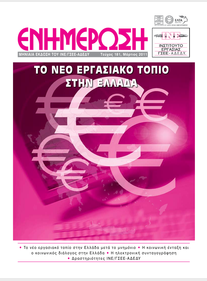
Summary
The developments in the field of employment relations emerging in Greece following the imposition of the memorandum represent the achievement of an objective pursued over the past two decades by international and national circles of powerful economic interests, implemented using the crisis and the economic adjustment programme as a pretext and an alibi. The changes taking place share the same spirit as the “reforms” of the last two decades, invoked under the objective of competitiveness, which translates into reducing and squeezing labour costs with uncertain effectiveness, beyond ensuring increased capital profitability, deregulating employment relations and the social protection system, and expanding precariousness and insecurity among workers. In this direction, strong state interventionism as well as employers’ refusal to accept the trade union movement’s alternative proposals through the social dialogue process have led to choices that failed, and continue to fail, to shield the Greek economy and society against the economic crisis and recession. These findings
are addressed in the articles published in this issue of ENIMEROSI, focusing on social dialogue and the new labour landscape in Greece during the memorandum era. In addition, this issue of ENIMEROSI features an article on electronic prescribing. Finally, INE’s recent activities are presented.