


Summary
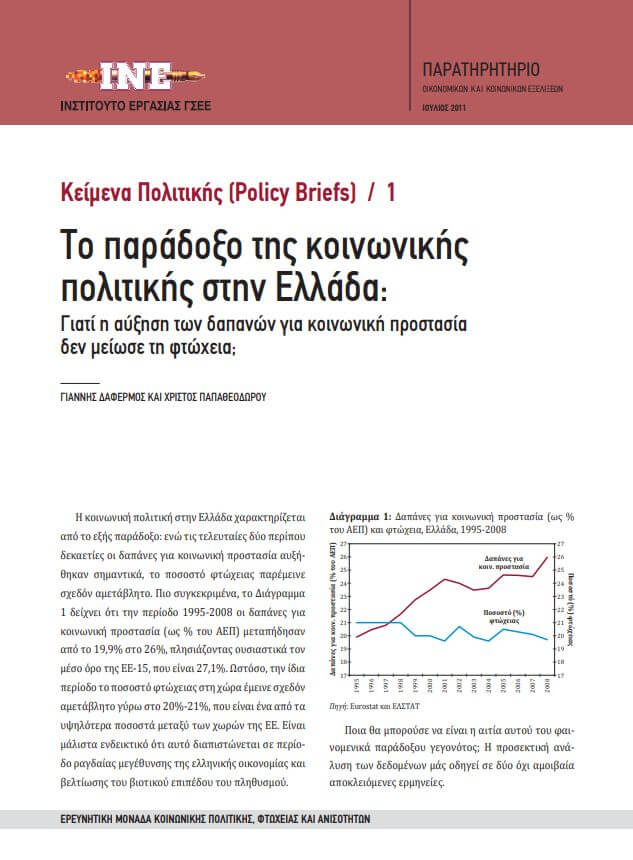
Social policy in Greece is characterised by the following paradox: while social protection spending has increased significantly over the past two decades or so, the poverty rate has remained virtually unchanged. This policy brief outlines two possible, non-mutually exclusive, explanations for this phenomenon. The first relates to the structural characteristics of the social protection system in Greece, which render it particularly ineffective in the use of resources allocated to social protection. The second focuses on the low share—compared to the EU average—of non-pension transfers in total social transfers.